Ford Turns to BYD for Hybrid Batteries as EV Demand Cools Globally
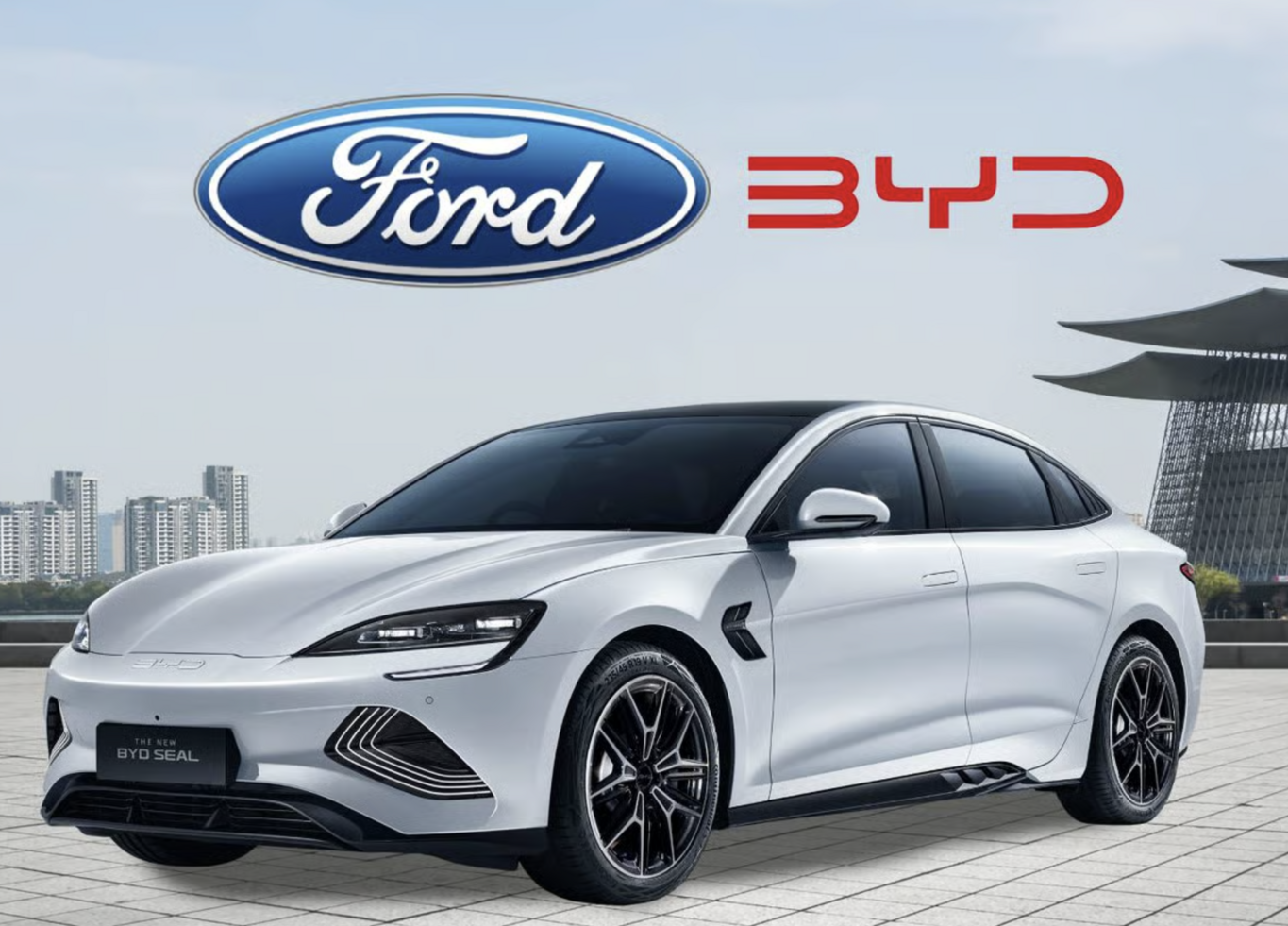
The electric-vehicle boom was supposed to redraw the global auto industry. Instead, its cooling has triggered a strategic reset—and Ford’s latest move underscores just how profound that shift has become.
After years of investing billions to chase an all-electric future, Ford Motor Co. is now in talks with China’s BYD, the world’s largest EV and battery maker, to source batteries for hybrid vehicles, not fully electric ones. The discussions come as consumer demand for EVs softens, costs remain stubbornly high, and automakers face mounting pressure to balance electrification goals with near-term profitability.
If completed, the deal would likely see Ford buying BYD-made batteries for use in factories outside the United States, highlighting both the growing importance of hybrids in the transition era and the unavoidable role Chinese battery champions now play in the global automotive supply chain. Beyond a simple supplier agreement, the talks reflect a broader industry recalibration—one with far-reaching implications for competition, geopolitics, and the future pace of electrification.
1. What’s Happening? Ford and BYD in Battery Supply Talks
Ford Motor Company is in ongoing discussions with China’s BYD—one of the world’s largest electric vehicle (EV) and battery producers—to potentially source batteries for Ford’s hybrid vehicles.
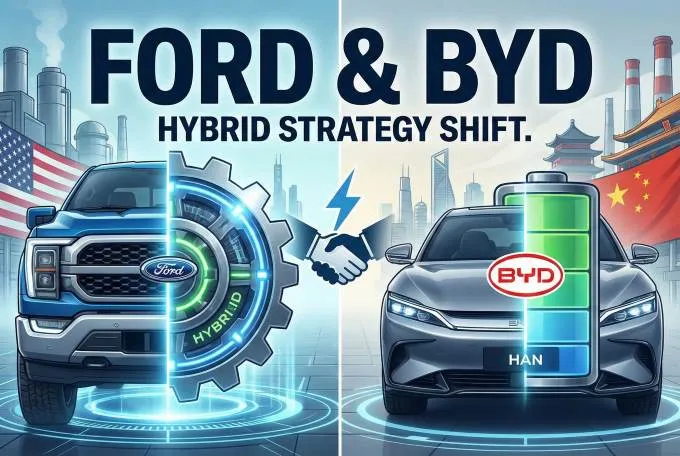
The reported talks focus not on pure EV batteries but on hybrid and extended-range hybrid vehicle batteries, a shift aligned with Ford’s changing product strategy.
If finalized, the expected structure of the arrangement could involve Ford importing BYD-made batteries for assembly in Ford plants outside the United States, particularly in Europe and Asia.
The discussions are still preliminary, and no binding agreement has yet been announced.
This news has attracted market interest, with BYD’s share prices rising on the possibility of the partnership.
2. Why Now? The Broader Strategic Context
A. Ford’s Shift from Pure EVs to Hybrids
Ford has recently backed away from an aggressive push into full battery-electric vehicles (EVs) after slower than expected demand in North America.
In late 2025, Ford announced a $19.5 billion charge tied to its EV business and canceled several EV models as part of a strategic realignment.
As a result, Ford is now placing greater emphasis on hybrid (HEV) and plug-in hybrid (PHEV) vehicles, which currently show stronger consumer demand in some markets and typically face fewer infrastructure barriers than EVs.
Ford’s goal is for hybrid, PHEV, and BEV models to represent roughly half of its global sales by 2030, balancing electrification and near-term profitability.
Securing a reliable source of hybrid-appropriate battery technology is therefore central to Ford’s repositioned growth strategy.
3. Why BYD? Battery Scale, Cost, and Capability
BYD is not just a leading automaker—it’s also one of the largest battery manufacturers globally.
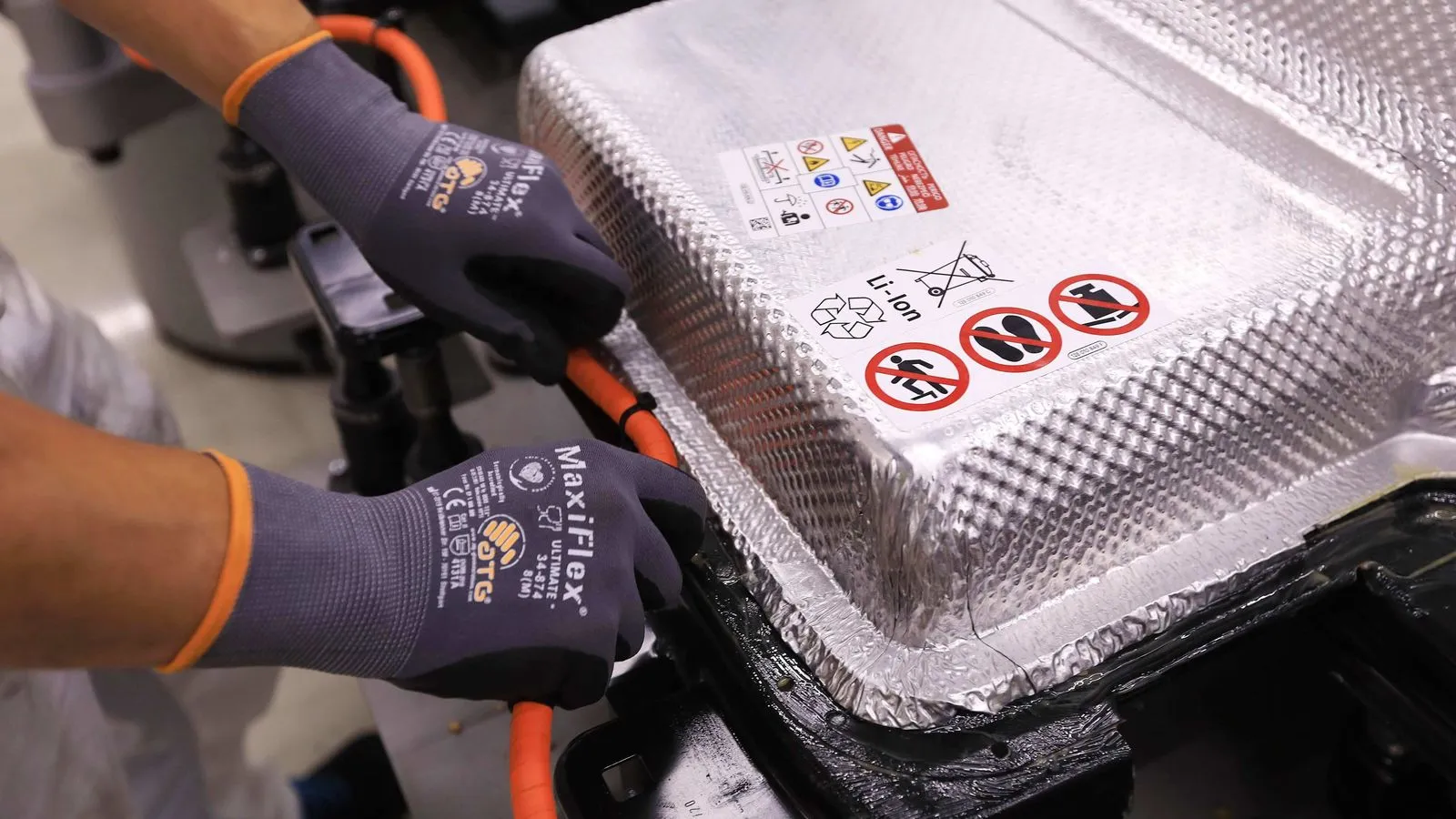
BYD has a long history in battery production and delivers high-volume capacity with competitive cost advantages, especially in lithium-iron phosphate (LFP) chemistry.
The company already supplies batteries to a range of global automakers and has built a reputation for economies of scale and manufacturing efficiency.
Ford and BYD already have a working relationship: in China, some Ford models like the Bronco EV and extended-range variants use BYD-supplied batteries through existing partnerships with local joint-venture partners.
This makes BYD a natural candidate for scaling hybrid battery supply as Ford expands its electrified product lineup worldwide.
4. Business Implications
A. Supply Chain Strategy and Cost Management
For Ford:
Improved battery accessibility: Partnering with BYD could secure a stable, lower-cost source of batteries, which is crucial as hybrid volumes grow.
Global positioning: Using batteries from BYD in plants outside the U.S. helps navigate regulatory constraints (e.g., U.S. tax incentives that require domestic content) and keeps hybrid production competitive in Europe and Asia.
Risk diversification: Ford’s pivot reduces exposure to the highly competitive pure EV segment, where Chinese manufacturers have been gaining ground.
For BYD:
Expanded revenue streams: Supplying batteries to a major global automaker represents a significant non-captive OEM business opportunity beyond its own vehicle production.
Global footprint: BYD continues expanding battery manufacturing capacity internationally, aligning with increased demand beyond China.
5. Geopolitical and Market Risks
While the economics may be attractive, the talks also raise geopolitical and industry concerns:
U.S. political backlash: Prominent U.S. policymakers (e.g., White House trade adviser Peter Navarro) have voiced concerns about relying on Chinese suppliers for critical automotive components, citing supply chain vulnerabilities and national security risks.
Trade tension exposure: A strong dependency on a Chinese supplier could expose Ford to trade policy volatility and future tariffs or export restrictions—factors outside corporate control.
Regulatory complexity: Global incentives and content rules (like the U.S. Inflation Reduction Act) influence where and how batteries can be used to qualify for subsidies, complicating the wholesale import of foreign-made cells into domestically sold vehicles.
These risks underline that even a cost-effective battery deal must be balanced with strategic supply chain resilience.
6. Long-Term Strategic Implications
Automotive supply chain reshaping: A Ford–BYD collaboration would signal a further blurring of geographic and political boundaries in automotive component sourcing—something that had been constrained by past trade tensions.
Competitive dynamics: Western automakers increasingly explore partnerships with Asian battery leaders (e.g., Ford licensing technology from CATL for U.S. battery plants), reflecting global consolidation in battery manufacturing and the unavoidability of Chinese players in the supply chain.
Market positioning: If executed well, the deal could accelerate Ford’s hybrid electrification strategy while managing costs—potentially improving product competitiveness in Europe, Asia, and other growth regions.
Conclusion
Ford’s talks with BYD are emblematic of a broader industry shift: the realignment of electrification strategies from pure EVs toward hybrids and extended-range models due to market demand realities and cost pressures.

A successful deal would not only strengthen Ford’s supply chain with competitively priced batteries but also spotlight the rising influence of Chinese battery producers in global automotive manufacturing. However, geopolitical tensions and regulatory factors create significant strategic and political headwinds that Ford must navigate carefully before any long-term agreement materializes.
You may Also Like

Can You Make a Consistent Monthly Income from Betting? The Best Skill-Based Betting Platforms and Strategies
Secured Credit Cards for Beginners: What Every First-Time User Needs to Know