What Every Upcoming Business Needs to Know Before Launching: A Practical Guide to Planning for Success
Every successful business begins somewhere, more often with small steps or with nothing at some point. Some entrepreneurs begin with nothing more than an idea and determination, while others spend years building experience before launching their own venture. Regardless of how a business begins, one truth remains the same: a great idea alone isn't enough to build a successful company.
Many startups fail not because the product or service isn't good, but because they overlook essential planning, financial forecasting, legal compliance, or market research. Today's competitive business landscape demands more than passion; it requires preparation, adaptability, and data-driven decision-making.
If you're planning to launch your first business or invest in a startup, here are the key areas you should understand before leaping.
What Is The Process for Setting Up a Startup Financial Model Template
Validate Your Business Idea First

- Before investing money to establish a business, ask yourself: Does my business solve a real problem? Who is my ideal customer? Is there enough market demand? Who are my competitors? What makes my business different?
- So conduct surveys, study customer behavior, analyze competitors, and test your product or service with a small audience before scaling. You would find many small businesses building big only by considering small things and the customer's point of view.
- And a pro tip: Build a Minimum Viable Product (MVP) to gather customer feedback early instead of investing heavily in a complete product.
Create a Data-Driven Business Plan Template
- A business plan is no longer just a document for banks or investors; it's your strategic roadmap.
- A data-driven business plan template should include:
- Executive Summary: A concise overview of your business, goals, and unique value proposition.
- Market Analysis: This includes Industry size, Growth trends, Customer demographics, Target audience, Competitor analysis, SWOT analysis, and products or Services.
- Clearly explain: What you offer, why customers need it, Pricing strategy, Competitive advantages, and Marketing Strategy.
- Cover: Branding, Social media, SEO, Paid advertising, Email marketing, and Sales channels
- Operations Plan Detail: daily operations, suppliers, technology, inventory management, customer support, and financial plan. This is where investors focus most.
Build a Startup Financial Forecasting Model Template

- Every startup should prepare a Startup Financial Model Template (Excel) before launching.
- Can this business become profitable? Is a critical question among all business owners that the financial forecasting model helps answer.
- It helps estimate certain factors like the startup costs, revenue projections, operating expenses, profit margins, cash flow, funding requirements, and break-even analysis.
Small Business Financial Forecasting Model
- Financial forecasting isn't about predicting the future perfectly; it's about preparing for different scenarios to create a risk-proof plan.
- Also understand the union budget and countries' legal and financial processes while planning the financial forecasting model. Your forecasting model should include
Revenue forecast
You should estimate monthly sales based on expected customers, pricing, seasonal demand, and sales growth. For Example:
Month | Customers | Average Sale | Revenue |
January | 120 | $80 | $9,600 |
February | 145 | $82 | $11,890 |
March | 175 | $85 | $14,875 |
Expense Forecast
- This includes analysing or sorting out rent, salaries, marketing, utilities, software subscriptions, inventory, insurance, and taxes.
- Previously knowing these facts can help you estimate the expenditure and benefit returns estimations.
Cash Flow Forecast
- It should monitor Money coming in vs. Money going out.
- Healthy cash flow keeps businesses operating even during slower sales periods.
Break-Even Analysis
- Know exactly when your business starts making a profit.
- Formula: Fixed Costs ÷ Contribution Margin = Break-Even Point
Legal Preparations Every Business Should Make

Legal requirements vary by industry, but every business should establish a strong compliance foundation before operations begin.
Register Your Business
- Choose the appropriate legal structure, whether it is Sole Proprietorship, Partnership, Limited Liability Company (LLC), Private Limited Company, or Corporation.
- The right structure affects taxation, liability, funding options, and future growth.
Obtain Required Licenses and Permits
Depending on your sector, you may need a
- Trade license
- GST/VAT registration
- Food safety certification
- Professional licenses
- Import/export permits
- Environmental approvals
- Municipal permits to protect Intellectual Property.
Create Brand Security
- You must create security for your business name, Logo, Trademark, Copyright, or Patent (if applicable).
Prepare Legal Agreements
Have professionally drafted
- Employment contracts
- Vendor agreements
- Client contracts
- Partnership agreements
- Non-disclosure agreements (NDAs)
- Privacy policy and terms and conditions.
Industry-Specific Planning
Different industries require different priorities.
- Retail Businesses focus on inventory management, supplier relationships, point-of-sale systems, warehousing, and customer loyalty.
- Restaurants & Cafés prioritize food licenses, kitchen efficiency, menu engineering, hygiene standards, and vendor management.
- E-commerce concentrates on logistics, payment gateways, website optimization, customer support, return policies, and digital marketing.
- Technology Startups invest in product development, cybersecurity, Cloud infrastructure, data privacy, and scalable architecture.
- Real Estate generally plans for regulatory approvals, property documentation, CRM systems, lead generation, and market research.
- Build a Strong Brand: Your brand is much more than a logo. One needs to develop brand identity, mission statement, visual guidelines, tone of voice, customer experience, social media presence, and customers remember consistent brands.
Invest in Technology Early

- Automation saves time and reduces operational costs.
- Invest in useful tools like accounting software, CRM platforms, project management tools, inventory systems, payroll software, marketing automation, and AI-powered customer support.
Prepare for Risks
- Every business faces uncertainty, so creating contingency plans or a data-driven business plan template for Economic downturns, supply chain disruptions, employee turnover, cybersecurity threats, cash flow shortages, regulatory changes, and risk management strengthens long-term resilience.
Measure Performance with KPIs
Track key metrics from day one. Examples include:
- Revenue growth
- Gross profit margin
- Customer acquisition cost (CAC)
- Customer lifetime value (CLV)
- Conversion rate
- Monthly recurring revenue (MRR)
- Cash runway
- Employee productivity
- Data-driven decisions consistently outperform assumptions.
Highlights of a Startup Financial Model Template (Excel)
Using an Excel-based financial model template allows entrepreneurs to adjust assumptions easily and see how changes in pricing, expenses, or sales impact the overall business. A well-designed startup financial model in Excel should include the following worksheets:
Assumptions Sheet | Market size | Pricing | Growth rates |
Inflation | Tax rates | Revenue Model | Product-wise sales |
Customer projections | Subscription income | Seasonal trends | Expense Tracker |
Fixed expenses | Variable expenses | Marketing budget | Operational costs |
Cash Flow Statement | Monthly inflows | Monthly outflows | Net cash position |
Revenue | Profit & Loss Statement | Cost of goods sold (COGS) | Gross profit |
Operating expenses | Net profit | Balance Sheet | Assets |
Liabilities | Equity | Break-Even Dashboard | Monthly profitability |
Required sales volume | Cost analysis | KPI Dashboard | Revenue growth |
Burn rate | Profit margins | Customer metrics | Cash reserves |
Common Mistakes New Entrepreneurs Make

- Generally, many startups launch without comprehensive market research; they should know their competition, consumer, consistency of the service they are offering, etc.
- Underestimating startup costs: many a time we estimate an amount, try to accumulate, and go ahead without having backup for the losses, so that should be considered.
- Many even ignore cash flow management; maintaining an equilibrium between outgoing and incoming money is necessary.
- Hiring for business is an expense which should be well thought out; skills can bring income, but hiring too quickly can strain the finances.
- Neglecting legal compliance is another mistake; even if it is a small detail, it should be addressed.
- In this digital world, having an online presence is necessary, and many fail to fathom its importance in the local and global market.
- Setting unrealistic revenue targets is a habit for many beginner businessmen, thinking they can make a lot at one its a process, not a lottery.
- Not tracking business performance is another drawback: just investing and thinking of the future and not keeping track of what has happened. It will help analyze shortcomings and errors for future-proof plans.
- Depending on a single customer or supplier, one should try to gain a wide range of options as backup for many new business owners
- Scaling before validating the small business financial forecasting model brings errors, so plan and go ahead.
Tips to Build a Successful Small Business Financial Forecasting Model
- Clear vision and realistic goals are necessary for a start.
- Solving customer problems should be the focus for small business planning.
- Build systems that are automated once in place instead of relying on manual processes.
- Review financial reports monthly; they include errors and clues to improve those errors.
- Continue learning from customer feedback; a happy customer is a happy business.
- Network with mentors and industry experts; connections may come in handy at any point in your business process.
- Invest in branding and digital marketing; creating a brand image and online presence in a digitally globalized world is necessary.
- Stay compliant with regulations; do not avoid even a small legal detail. It will help in the long run.
- Be flexible and adapt to market changes; it's ever-changing. This will keep you in the game, and learn to make decisions based on data, not assumptions.
Frequently Asked Questions:
1. What are 4 types of models for small businesses to be successful?
Ans) Four essential business models for small businesses include the subscription model, which generates recurring revenue; the e-commerce model, selling products online; the service-based model, offering professional expertise; and the franchise model, operating under an established brand. Choosing the right model depends on target customers, scalability, and long-term profitability.
2. How do financial forecasting models help small businesses?
Ans) Financial forecasting models help small businesses estimate future revenue, expenses, cash flow, and profitability using historical data and market trends. They support budgeting, inventory planning, hiring decisions, and investment strategies while identifying financial risks early. Accurate forecasts enable better decision-making, improve lender confidence, and promote sustainable business growth.
3. What are the 7 steps of small business forecasting models?
Ans) The seven steps include defining business goals, collecting historical financial data, analyzing market trends, estimating future sales, forecasting expenses and cash flow, creating financial projections, and regularly reviewing and updating forecasts. Following these steps helps businesses adapt to changing conditions, reduce uncertainty, and make informed strategic decisions.
Final Thoughts
Launching a business is one of the most rewarding journeys an entrepreneur can undertake, but success is not something that happens by chance. Behind every thriving small business is careful planning, financial discipline, legal compliance, and a willingness to adapt to changing market conditions. The businesses that succeed are not always the ones with the biggest budgets; they are the ones that prepare thoroughly, understand their customers, manage their finances wisely, and remain committed to continuous improvement.
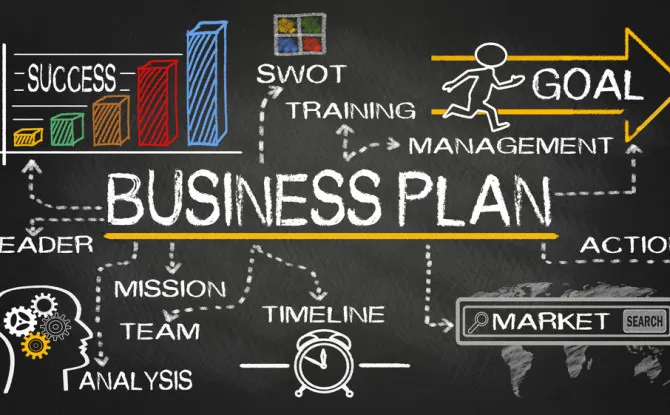
So, building a data-driven business plan template that will aid a business is necessary, be it opening a local café, launching an e-commerce store, developing a technology startup, or investing in a real estate venture; the fundamentals remain the same: validate your idea, create a reliable small business financial model template in Excel, and use small business financial forecasting to guide every major decision.
To conclude, building a business model is rewarding, provided done procedurally. Keep reading more such articles, follow Micromunch to get more business and financial updates and events.
By P. Manika (Performist Content Writer)
You may Also Like

India Student Protests 2026 Explained: Politics, Economy & Education Analysis

US Imposes 50% Tariffs on Canadian Goods: Understanding Economic, Political, and Consumer Impact